
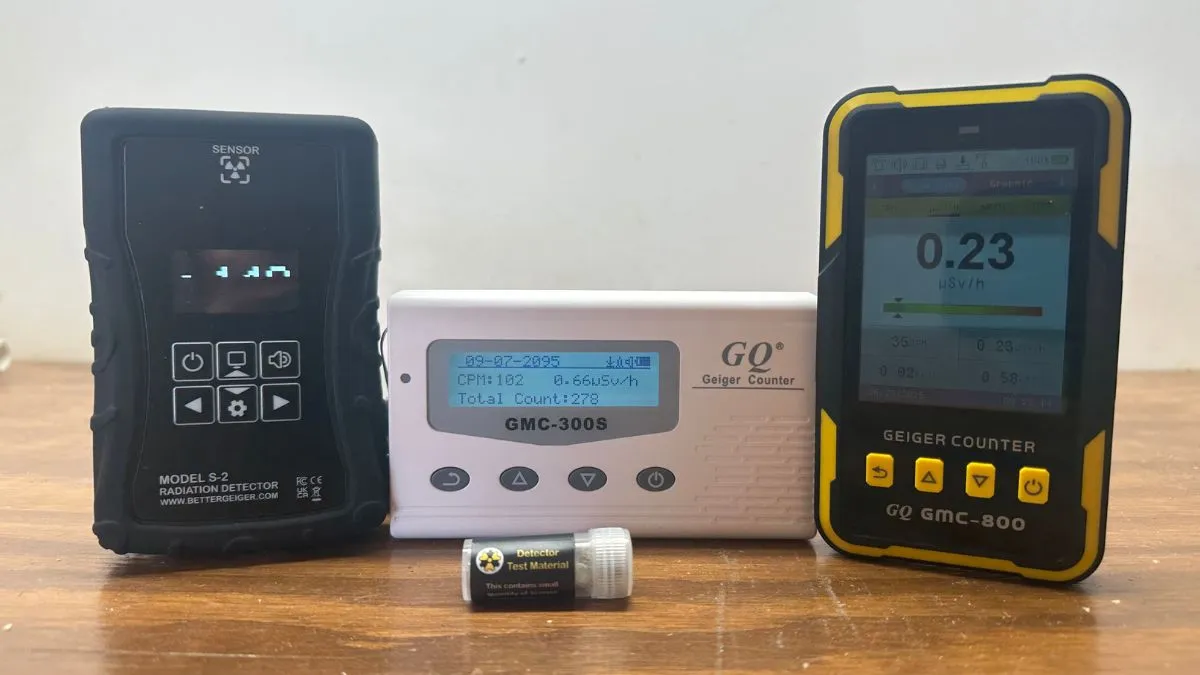
Radiation detectors are essential tools used in various fields such as nuclear power plants, healthcare facilities, and environmental monitoring to detect and measure the presence of radiation. These detectors play a crucial role in ensuring the safety of individuals and the environment by providing information on radiation levels.
With advancements in technology, radiation detectors have become more sophisticated and sensitive, allowing for accurate measurements of radiation levels. Understanding how these detectors work and the different types available is important for anyone working in industries where radiation exposure is a concern. This article will explore the functions of radiation detectors, the principles behind their operation, and the importance of using them in various applications.
Types of Radiation Detectors
There are several types of radiation detectors available, each with its unique characteristics and applications. Some common types include ionization chambers, scintillation detectors, and Geiger-Muller counters. Ionization chambers measure the quantity of ionizing radiation present by collecting and counting the electric charge produced. Scintillation detectors use crystals or liquids that emit light when they interact with radiation, allowing for the detection of gamma rays and other high-energy particles. The radiation detector is widely used due to its versatility and sensitivity in detecting alpha, beta, and gamma radiation.
Principles of Operation
Radiation detectors operate based on the principle that ionizing radiation can cause the atoms in a material to become ionized, creating charged particles that can be detected. When radiation interacts with the detector material, it produces electrons that generate an electric signal, which is then converted into a measurable output. The sensitivity and efficiency of a radiation detector depend on factors such as the type of detector used, the energy of the radiation, and the surrounding environment. Understanding these principles is crucial for interpreting the measurements obtained from a radiation detector accurately and ensuring effective radiation monitoring in various settings.
In conclusion, radiation detectors play a vital role in ensuring the safety of individuals and the environment by detecting and measuring the presence of radiation. As technology advances, these detectors have become more sophisticated and sensitive, allowing for accurate measurements of radiation levels. Understanding the different types of detectors available and the principles behind their operation is crucial for effectively monitoring radiation exposure in various industries. By utilizing radiation detectors, professionals can ensure proper safety measures are in place to protect against potential health hazards associated with radiation exposure.